
Work Wardrobe Feeling Stale? 20 Business Professional Outfits
I believe a professional wardrobe should do more than make me look polished. It should help me feel comfortable, confident, and ready for whatever the workday brings. From interviews and client presentations to regular office meetings, the right combination of tailoring, color, and accessories can make getting dressed much easier.
Business professional outfits for women do not have to mean wearing the same black suit every day. I can build a versatile work wardrobe with coordinated suits, tailored trousers, pencil skirts, midi dresses, structured jackets, and well-fitted blouses. The key is choosing pieces that suit my workplace, fit properly, and remain comfortable throughout a busy schedule.
When I put together business professional outfits, I focus on three things: appropriate formality, a flattering fit, and fabrics that can handle a full day at work. Matching suits offer a dependable choice for important meetings, while contrasting blazers and trousers create more variety. Skirts, dresses, and structured tops provide alternatives when I want something different from a traditional pantsuit.
I also pay attention to practical details, including shoe comfort, fabric transparency, jacket construction, and how clothing looks after sitting for several hours. With a few neutral basics, selected accent colors, and thoughtful accessories, I can create multiple polished outfits without buying a completely new wardrobe.
Related article: Effortless Summer Crop Top with Maxi Skirt Outfits 2026 – 29 Looks You’ll Love
27 Business Professional Outfits Women Actually Want to Wear
When I look for business professional outfit ideas, I want clothing that feels current without sacrificing the standards of a formal workplace. A polished outfit should look intentional, but it should also work in real situations, including long commutes, busy meeting schedules, and changing office temperatures.
The following combinations offer different ways to approach professional dressing. I can choose structured tailoring when I need a formal appearance, soften the look with neutral knitwear, or introduce a richer color when my workplace allows more personal expression.
The Matching-Suit Advantage
A matching suit gives me a reliable starting point whenever I need to look especially professional. Because the jacket and trousers or skirt share the same fabric and color, the outfit looks coordinated without requiring much styling.
I do not have to limit myself to traditional black or navy. Cream, beige, burgundy, plum, and powder blue can all work in professional wardrobes when the fabric, cut, and overall styling suit the occasion.
The White Suit with a Cobalt Punch

I like the contrast of a crisp white blazer and matching high-waisted wide-leg trousers with a cobalt blue satin blouse. The white tailoring creates a clean foundation, while the saturated blue adds personality without making the outfit look overly casual.
Gold drop earrings complement the blue and white combination, and simple shoes help keep the focus on the suit. For a conservative workplace, I would choose a deeper blue blouse or a matte fabric instead of a highly reflective satin.
The fit matters just as much as the color. I look for a blazer that sits properly at the shoulders and trousers that fall smoothly without bunching around the shoes.
Before wearing a white suit to an important meeting, check it in natural and indoor lighting. A lined fabric and appropriate undergarments can help prevent unwanted transparency.
The Three-Piece That Commands Without Shouting

A beige blazer, matching waistcoat, and straight-leg trousers create a refined three-piece outfit that feels more distinctive than a standard two-piece suit. I would wear a white collared shirt underneath to provide contrast and keep the overall look crisp.
Black pointed-toe pumps and a structured black handbag introduce definition against the softer beige palette. The waistcoat adds another layer of detail without requiring a bold print or oversized accessories.
When selecting beige tailoring, I consider how the shade works with my complexion. A slightly deeper camel or a cooler taupe may provide more contrast than a pale beige that blends too closely with my skin.
If the waistcoat and blazer already provide plenty of structure, I keep jewelry simple. Small earrings and a classic watch are often enough.
The Plaid Suit That’s Anything But Fussy

A double-breasted plaid blazer with matching slim-fit trousers offers a professional alternative to solid-color tailoring. I would choose a beige and tan pattern for a subtle, coordinated appearance that feels appropriate for many business settings.
Gold-toned buttons provide a little detail, while a tan leather handbag complements the warm colors. To prevent the pattern from overwhelming the outfit, I would keep the blouse, shoes, and other accessories understated.
Plaid can look traditional or modern depending on its scale and the garment’s cut. A smaller check and a well-defined shoulder usually create a cleaner finish than a bulky jacket with a large, high-contrast pattern.
When buying patterned suiting, check that the pattern aligns reasonably well at the main seams. Careful pattern matching can make a garment look more refined.
The Oversized Suit That Still Means Business

An oversized beige blazer paired with matching high-waisted trousers creates a relaxed silhouette while keeping the overall look coordinated. I would balance the loose outer layer with a fitted white top that defines the waist and prevents the outfit from appearing shapeless.
A simple silver watch works well here because the tailoring and proportions provide most of the visual interest. Neutral shoes and a structured handbag would complete the look without introducing unnecessary details.
The main challenge with oversized tailoring is choosing the right size. I want enough room to move comfortably, but the jacket should still sit neatly across my shoulders and avoid overwhelming my frame.
Try the complete outfit while standing, sitting, and reaching forward. If the blazer shifts excessively or the trousers pull at the hips, another cut may work better.
The Plum Power Suit That Softens the Room

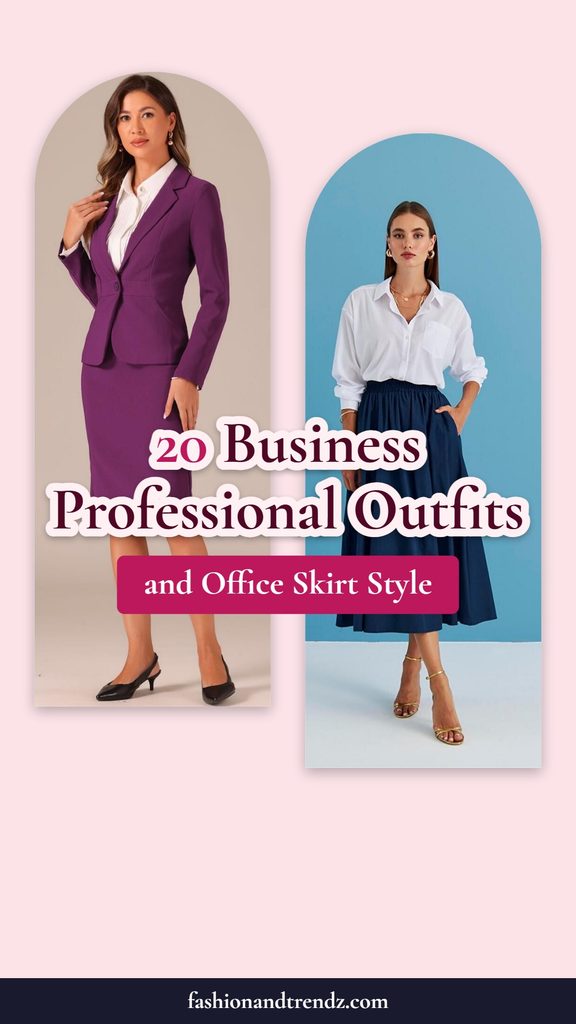
A plum blazer and matching pencil skirt offer a refreshing alternative to the usual black or navy suit. I would pair them with a white button-down blouse to brighten the outfit and maintain a professional appearance.
Nude pointed-toe pumps provide a neutral finishing touch, while a simple handbag keeps the color combination balanced. Plum works especially well when I want a noticeable color without choosing something fluorescent or overly bright.
I would look for a suit fabric with a smooth, substantial finish rather than one that appears thin or excessively shiny. The right texture helps the color feel sophisticated and suitable for a professional setting.
When wearing a colored suit, I keep the blouse and shoes relatively neutral. This allows the suit to remain the main feature without making the outfit feel busy.
The Burgundy Suit That Speaks Without Sound

A burgundy blazer with matching straight-leg trousers creates a strong, coordinated look with more warmth than a traditional dark suit. I would soften the deep red shade with a camel knit top tucked neatly into the trousers.
Gold pointed-toe heels and a structured brown handbag complement the warm color palette. For a more conservative office, I could replace the decorative handbag with a plain leather tote and choose simple pumps.
The knit top should feel smooth and substantial enough to sit comfortably beneath the blazer. Fine-gauge wool or a quality knit blend can provide a neat finish without adding unnecessary bulk.
Follow the care instructions for knitwear and use a fabric comb or shaver when appropriate to remove small pills. Keeping frequently worn layers in good condition helps the whole outfit look polished.
The Powder-Blue Suit That Won’t Fade to Wallflower
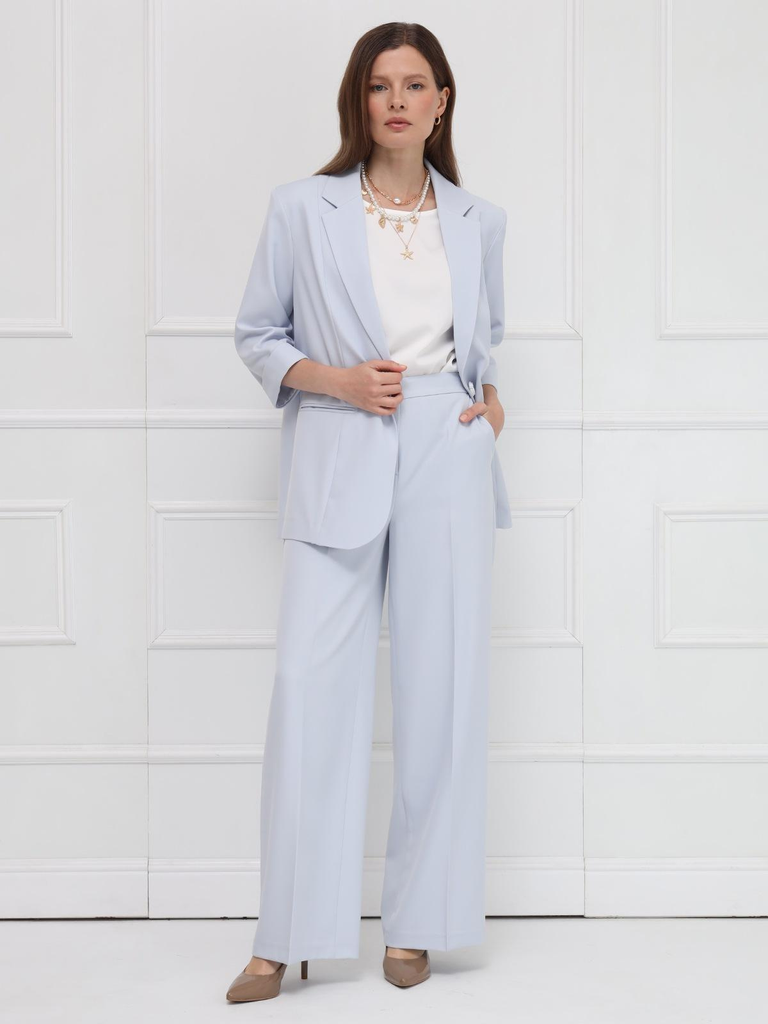
A powder-blue blazer and matching high-waisted wide-leg trousers create a fresh business outfit that feels especially suitable for spring and summer. I would pair them with a fitted white top to maintain contrast and prevent the light colors from blending together.
Layered gold necklaces add warmth, while neutral shoes and a structured bag keep the outfit grounded. The wide-leg cut can also create a long visual line when the trousers are properly hemmed.
Light-colored suits need careful fabric selection. I check the material for transparency and wrinkles, especially around the seat and knees, because these areas can become noticeable after hours of sitting.
Sit down in the suit before committing to a purchase. A fabric that looks smooth while standing may crease or pull uncomfortably when I sit at my desk.
The Blazer-and-Trouser Equation
I do not need a matching suit to create a professional outfit. Combining a structured blazer with trousers in a different color gives me more flexibility and makes it easier to use individual pieces across several workdays.
For a reliable wardrobe, I would start with one dark blazer, one neutral blazer, and a few well-fitted pairs of trousers. This simple combination creates numerous options without requiring a large collection of clothing.
The Camel-and-Black Formula

A black blazer and fitted black top create a sleek base, while camel wide-leg trousers introduce warmth and contrast. I would define the waist with a black belt featuring subtle gold hardware and choose a structured tan handbag to connect with the trousers.
Black heeled sandals and understated gold jewelry complete the combination. In colder weather, I could switch the sandals for closed-toe pumps or ankle boots while keeping the rest of the outfit unchanged.
The trouser length is important with a wide-leg cut. I want the hem to fall cleanly over my shoes without dragging along the ground or gathering excessively around my ankles.
Have trousers hemmed while wearing the shoes I plan to pair with them most often. This helps maintain the intended shape and prevents the hem from looking too short or too long.
The All-Black Authority

A black blazer, fitted black top, and cropped straight-leg trousers create an uncomplicated monochrome outfit. Nude pointed-toe pumps add contrast, while a structured black handbag keeps the overall appearance consistent.
I like this combination for busy days when I need to get dressed quickly without spending time coordinating colors. It can work for interviews, office meetings, and formal appointments, depending on the cut and fabric of each piece.
To keep an all-black outfit from looking flat, I mix different textures. A crepe blazer, a soft cotton-blend top, and tailored wool-blend trousers can create subtle contrast even when every piece is the same color.
Keep black clothing looking fresh by following the garment’s washing instructions, separating dark colors from lint-producing fabrics, and storing tailored pieces on suitable hangers.
The Classic White Shirt Remix

A black tailored blazer, white button-down shirt, and black high-waisted trousers create a dependable business professional outfit. I would complete the look with a black shoulder bag and small hoop earrings for a clean, understated finish.
The shirt deserves attention because its collar, fabric, and fit affect the entire outfit. I prefer a material that holds its shape without feeling stiff and a collar that lies neatly beneath the blazer lapels.
If the shirt pulls across the bust, I would try another size or cut instead of forcing the buttons to sit under tension. A tailor may also be able to add discreet closures between buttons when the rest of the shirt fits well.
Keep a spare white shirt at the office if your schedule regularly includes client meetings. It can be useful when lunch spills or unexpected stains affect your first outfit.
The Camel Blazer, Black Trouser Switch

A camel blazer layered over a white ribbed top and black ankle-length trousers creates a smart outfit with a softer feel than an all-black combination. Nude pointed-toe heels extend the neutral palette, while a watch and delicate necklaces provide a little extra detail.
I would choose a top with enough thickness to maintain coverage beneath the blazer. A smooth, substantial knit usually looks more polished than a thin ribbed fabric that wrinkles or clings throughout the day.
This combination works particularly well when I want to look professional without feeling overdressed. I can wear it to a team meeting, a work lunch, or a day filled with appointments.
Keep the blazer buttoned during a fitting and then move your arms naturally. The fabric should not pull sharply across the back or create uncomfortable tension at the waist.
The Navy-Cream Contrast

A navy blazer paired with a black fitted top and cream straight-leg trousers creates a balanced combination of dark and light shades. I would add a black leather belt and a structured black shoulder bag to connect the darker pieces.
Gold-toned jewelry introduces warmth without distracting from the tailored silhouette. The result feels polished while offering a little more variety than a traditional matching navy suit.
Cream trousers require a careful check for transparency. I would examine them under bright lighting and choose suitable undergarments in a shade close to my skin rather than assuming white will be invisible.
If I am unsure about cream trousers, I take a quick photo under ordinary indoor lighting before leaving home. This can reveal transparency or unwanted creasing that is less obvious in a dim bedroom.
The Relaxed Blazer That Still Means Business

A camel blazer, brown sleeveless knit top, and cream tapered trousers create a warm, coordinated outfit. I would add a tan belt, a brown leather shoulder bag, and beige pointed-toe heels to keep the color palette consistent.
Small hoop earrings and a simple ring provide enough detail without making the outfit feel over-accessorized. The sleeveless top also gives me the option of removing the blazer when the office becomes warm.
I make sure the top offers appropriate coverage around the armholes and neckline. This is particularly important when I know I will be removing my jacket during the day.
Before wearing a sleeveless top to work, raise both arms and sit down to check that the fabric remains in place. A well-fitting top should feel secure without restricting movement.
The Houndstooth Blazer, Simplified

A black-and-white houndstooth blazer paired with a black sleeveless top and cream tapered trousers adds pattern without making the outfit too complicated. I would use a tan belt with gold hardware to define the waist and choose beige shoes and a matching handbag for a coordinated finish.
The pattern is already a strong feature, so I would avoid adding another bold print. Simple jewelry and a clean trouser silhouette allow the jacket to stand out while keeping the overall appearance professional.
When choosing houndstooth, I consider the scale of the pattern and the shape of the blazer. A well-fitted jacket with a balanced print usually feels more current than an oversized style with bulky shoulders.
If I wear a patterned blazer frequently, I keep the rest of my wardrobe simple enough to mix and match with it. This makes the jacket easier to reuse across different outfits.
The Skirt and Dress Authority
Skirts and dresses can be just as appropriate as trousers in a professional wardrobe. I focus on length, fabric weight, ease of movement, and how the garment sits when I am seated or walking.
A pencil skirt creates a defined silhouette, while an A-line or straight midi skirt offers a different shape. For dresses, I look for clean lines and a fit that allows comfortable movement without constant adjustment.
The White-Blazer, Black-Skirt Combo

A white tailored blazer worn over a fitted black top and black pencil skirt creates a sharp contrast. I would add a black belt with gold hardware and a structured black handbag to bring the pieces together.
Gold bracelets, rings, or a simple necklace can complement the look without making it too decorative. Black shoes complete the darker base, while the white jacket provides a clear focal point.
For a traditional corporate office, I would choose closed-toe pumps instead of heeled slide sandals. The best footwear choice depends on workplace expectations, but a clean, secure shoe is a reliable option for formal meetings.
Check that a pencil skirt allows you to walk comfortably and sit without the hem riding up excessively. A small back slit can improve movement while maintaining a professional appearance.
The Magenta Power Sheath

A magenta sleeveless sheath dress with a matching belt offers a colorful alternative to a neutral office dress. I would choose a midi length and a structured fabric to keep the bright shade looking polished.
Nude slingback heels and a tan tote soften the overall combination. A simple silver necklace and bracelet add a little detail without competing with the dress.
In a conservative workplace, I would keep a fitted blazer nearby so I can adjust the outfit for more formal meetings. A jacket also provides an extra layer when office air conditioning makes sleeveless clothing uncomfortable.
When purchasing a bright dress, check whether the color works with the neutral shoes and bags I already own. This makes the dress more versatile and easier to wear regularly.
The Oversized-Shirt, Navy-Skirt Balance

A white oversized button-down tucked into a navy high-waisted midi skirt combines a relaxed top with a more structured bottom. I would add black pointed-toe heels and a small black shoulder bag to maintain a polished finish.
Gold statement earrings can add personality, especially when the shirt is otherwise simple. I would make sure the shirt stays neatly tucked and does not create excessive bulk around the waistband.
The material should provide enough coverage for a professional setting. If the white fabric is too sheer, a lightweight camisole in a skin-matching shade can help.
A partial tuck can create a casual effect, but for a formal office I prefer a clean full tuck or a shirt designed to sit neatly at the waist.
The Charcoal-Blazer, White-Skirt Pairing

A charcoal oversized blazer over a fitted dark gray top and a white high-waisted midi skirt creates a mix of soft and structured pieces. I would add a slim black belt and a black shoulder bag to give the lighter skirt a defined frame.
Gold hoop earrings provide a small accent, while black shoes connect with the darker upper half. Sunglasses can work well for the commute, but I would remove them before entering a meeting.
White skirts can reveal lines from underwear, especially in bright office lighting. I would choose seamless undergarments in a shade close to my skin and check the skirt in natural light before wearing it.
Walk, sit, and stand in a white skirt during a fitting. This helps me check for transparency, static cling, and fabric that shifts when I move.
Also read: 18 Tiered Skirt Outfits Summer 2026
The Soft Cardigan, Satin Skirt

A light pink ribbed cardigan paired with a white high-waisted satin midi skirt creates a softer business-casual outfit. I would add white pointed-toe ankle boots and a small structured handbag to maintain the clean color palette.
The satin skirt brings movement and texture, while the cardigan provides a gentle contrast. Because the outfit is less formal than a traditional suit, I would reserve it for workplaces with a flexible dress code or internal meetings.
A cropped cardigan needs to remain in place when I move. If it exposes the waistband or midriff whenever I reach for something, I would choose a slightly longer cut.
Satin can cling to tights or other clothing because of static electricity. An anti-static product suitable for the fabric may help, but I always test it on a hidden area first.
The No-Blazer, No-Problem Trousers
A blazer is useful, but it is not the only way to create a professional outfit. A structured blouse, a fine-gauge turtleneck, or a neatly fitted shirt can look polished when paired with well-cut trousers.
When I skip the jacket, I pay closer attention to the top’s neckline, fabric, and fit. These details help the outfit retain a professional appearance without relying on an outer layer.
The Cream Silk Blouse, Black Trouser

A cream blouse with a V-neck and softly shaped sleeves pairs beautifully with black high-waisted tailored trousers. I would add black pointed-toe pumps, a slim belt, and a tan shoulder bag for a balanced mix of light and dark shades.
The blouse adds softness while the trousers keep the outfit grounded. This combination can work well for meetings, presentations, and professional lunches where I want to look polished without wearing a full suit.
Silk and satin fabrics can show outlines more clearly than textured materials. I would check the blouse in bright light and choose smooth undergarments that provide suitable coverage.
Follow the care label when cleaning silk. Gentle handling and proper storage help preserve the fabric’s appearance and reduce the chance of damage.
The Dark-Gray Turtleneck, Wide-Leg Trouser

A charcoal turtleneck paired with matching wide-leg trousers creates a streamlined outfit that works particularly well in cooler weather. I would complete the look with black heeled ankle boots and a structured dark handbag.
The matching gray shades create visual continuity, while the difference in fabric texture keeps the outfit from looking flat. Since the outfit does not include a blazer, I would make sure the top fits neatly around the shoulders and neckline.
A turtleneck should sit comfortably without bunching or feeling tight around the throat. The trousers should also fall smoothly over the shoes rather than dragging along the floor.
For a long office day, choose a breathable knit with enough stretch to retain its shape. It should remain comfortable after hours of sitting at a desk.
The Bow Blouse, Black Wide-Leg

A beige satin blouse with a bow neckline paired with black high-waisted wide-leg trousers creates a polished look with a feminine detail. I would keep the remaining accessories simple so the neckline remains the main feature.
The black trousers provide structure and contrast, while the beige blouse adds softness. This combination is suitable for many office settings, although I would consider the blouse’s shine and bow size before wearing it to a particularly conservative meeting.
Satin can show creases and moisture marks, so I would check the blouse before leaving home and make sure it is clean and properly pressed.
If the bow feels bulky under a jacket or lanyard, choose a smaller tie detail or arrange the neckline so it lies flat. Comfort and a neat finish matter more than adding extra decoration.
The Striped Shirt, Relaxed-Yet-Sharp

A light blue striped shirt tucked into black high-waisted wide-leg trousers creates an easy combination that still looks professional. I would add black pointed-toe heels, a black belt, and a structured handbag to keep the outfit coordinated.
Gold hoop earrings, a delicate necklace, and a watch can complete the look without adding too much visual weight. A simple headband is another option if I want to keep my hair away from my face during a busy day.
The shirt’s fit is important because the stripes and collar naturally draw attention to the upper body. I would choose a pattern and cut that allow comfortable movement without pulling across the chest or back.
A fine vertical stripe can be easy to pair with solid trousers. If I already own several patterned shirts, I choose simple bottoms so the outfit stays balanced.
The Layered Outerwear Edit
A professional outer layer does not always have to be a conventional blazer. A structured coat or a neatly cut cropped jacket can provide a similar finishing effect, especially when paired with tailored trousers and a simple top.
I choose the layer according to the weather, my workplace, and the formality of the occasion. A coat may be useful for the commute, while a cropped jacket can work well in a creative office with a more flexible dress code.
The Camel Coat as Blazer

A camel tailored coat worn over an ivory fitted turtleneck and cream wide-leg trousers creates a coordinated neutral outfit. I would add gold hoop earrings and a small beige clutch for a refined finish.
The long coat and matching light trousers create a continuous color palette, while the ivory top adds a subtle distinction. Black cat-eye sunglasses can complete the outdoor look, although I would remove them when entering the office.
If I plan to wear the coat indoors as part of the outfit, I make sure it has a defined shoulder and a neat silhouette. A very bulky winter coat may be practical outside but can feel cumbersome in a meeting room.
Choose a coat that fits comfortably over the blazer or knitwear I normally wear. This avoids tight shoulders and sleeves that become difficult to move in during colder months.
The Houndstooth Cropped Jacket

A brown-and-cream houndstooth cropped jacket paired with a cream fitted top and camel tailored trousers creates a warm, coordinated look. I would finish it with black heels and a simple black clutch to provide contrast.
The patterned jacket gives the outfit personality without requiring additional prints. A delicate necklace can complement the neckline, while the tailored trousers keep the overall silhouette neat.
The jacket’s length makes a difference to the proportions. I would look for a cut that sits comfortably around the natural waist or hip area without riding up when I reach forward or sit down.
Try cropped jackets with both high-waisted and mid-rise trousers before choosing one. The combination should feel balanced and stay in place throughout the workday.
The Beige Cropped Jacket, Camel Trouser

A beige cropped jacket with simple gold-tone buttons pairs well with an ivory fitted top and camel high-waisted trousers. I would add a brown leather belt and matching structured handbag to connect the warm neutral shades.
Brown pointed-toe flats provide a comfortable alternative to heels while preserving a neat appearance. This makes the outfit useful for days when I need to move between meetings or walk around the workplace.
I prefer minimal buttons and clean lines because they make the jacket easier to style with other pieces. A simple design can be worn repeatedly without feeling tied to one particular trend.
When choosing flat shoes for the office, check the sole, toe shape, and overall finish. A comfortable shoe can still look professional when it is clean and well maintained.
The White Cropped Jacket, Camel Base

A white textured cropped jacket layered over a white knit top and camel tailored trousers creates a crisp, modern combination. I would add nude pointed-toe heels and a beige structured handbag to keep the palette soft and consistent.
The texture of the jacket helps distinguish it from the top, even though both are white. Black oval sunglasses can add a little contrast outdoors, but I would keep the accessories more understated inside the office.
White outerwear can pick up marks easily, so I pay attention to fabric care and storage. A stain-removal product designed for the material may be helpful, provided I test it first and follow the instructions.
Keep a small cleaning cloth or suitable stain-removal pen in my work bag when wearing light-colored clothing. Treating a small mark promptly can help prevent it from becoming harder to remove.
What Your Industry’s Unspoken Dress Code Actually Demands
I have learned that professional clothing is not judged by one universal set of rules. Expectations can vary between companies, departments, cities, and even individual teams. A relaxed blazer might be entirely suitable in a technology company but feel too informal in a traditional legal or financial office.
Before deciding what to wear, I look at how people dress in the environment where I work. I pay particular attention to colleagues who regularly meet clients, represent the organization, or lead important presentations.
The written dress code provides the starting point, but everyday workplace habits often help clarify how formal an outfit should be.
Three formality levels, one company: On a desk-focused day, I might wear tailored trousers with a fine-knit top. For a meeting with senior colleagues, I would add a structured blazer or another polished layer. For a formal client presentation, I would choose coordinated tailoring, understated accessories, and clean, appropriate footwear.
I do not need three separate wardrobes for these situations. A small number of versatile pieces can help me adjust the same basic outfit to different levels of formality.
The fabric tells that older industries still scan for: Fabric quality and construction can affect how professional an outfit looks. A jacket that holds its shape, trousers that maintain a clean crease, and shoes that are well cared for generally look more polished than pieces that are stretched, shiny from wear, or poorly fitted.
Details such as lapels, pockets, and shoe shapes can also influence the overall impression. However, I treat these as styling choices rather than universal rules, because workplace expectations differ.
The uniform trap for younger women: I do not think professional dressing requires copying another person’s wardrobe exactly. It makes more sense to understand the level of formality expected and then choose shapes, colors, and details that suit my own preferences.
For example, I might choose a modern straight-leg trouser instead of a traditional skirt suit while maintaining the same level of polish. The goal is to look appropriate for the room without feeling as though I am wearing a costume.
Mixed-generation teams, mixed readings: Different colleagues may have different expectations about sleeves, skirt lengths, footwear, and accessories. When I am unsure, I use the workplace’s established dress code and observe what people wear during important meetings.
A three-quarter-sleeve jacket, a midi dress, or a classic button-down can offer a useful middle ground. These choices are versatile without requiring me to sacrifice comfort or personal style.
Before an important presentation or interview, I plan an outfit that is slightly more formal than my everyday look. It is usually easier to remove a layer or simplify an accessory than to make an outfit more formal at the last minute.
How to Keep Your Outfit Working as Long as You Do
Professional clothing needs to handle more than a few minutes in front of a mirror. I consider how a garment feels after sitting, whether it wrinkles during my commute, and how easily I can care for it between wears.
A practical work wardrobe also includes a few useful backups. Small items such as a spare button, a lint roller, and comfortable commuting shoes can save time when something unexpected happens.
Undershirts that earn their drawer space: A lightweight camisole in a shade close to my skin can help provide coverage beneath a sheer white blouse. A white camisole is not always the least visible option, particularly beneath thin fabric, so I check the combination in daylight and under office lighting.
I also look for smooth undergarments that do not create obvious lines. If the blouse is still too transparent, I choose a different fabric or add a suitable layer rather than relying on lighting to conceal the problem.
The two-shoe system that saves your feet: When I have a long commute, I consider wearing comfortable loafers or suitable ankle boots and changing into dressier shoes at the office. This reduces the time I spend walking in shoes that may not be ideal for uneven pavements or public transport.
For everyday office wear, a low or medium block heel, a well-fitted loafer, or a clean flat can be more practical than a narrow stiletto. I prioritize a secure fit and enough cushioning to remain comfortable throughout the day.
Fabric strategy for air-conditioning whiplash: Office temperatures can change considerably between outdoor commutes, meeting rooms, and desk areas. I find it useful to choose layers that can be added or removed without changing the entire outfit.
Breathable fabrics and appropriate lining can improve comfort, while blended suiting materials may help reduce wrinkles. The best choice depends on the garment’s construction, climate, and care requirements, so I check the fabric label before purchasing.
The pencil-drawer emergency kit: I keep a few small essentials available for common clothing problems. A compact lint roller, safety pins, spare buttons, and a basic sewing kit can help with minor issues that might otherwise distract me during the workday.
For shoes, I use a suitable cleaning or touch-up product based on the material and color. I avoid applying products intended for one type of leather or finish to another without checking compatibility.
Shapewear as a posture tool: I treat shapewear as an optional clothing layer rather than a requirement for professional dressing. If I choose to wear it, I want a comfortable fit that allows normal breathing, sitting, and movement throughout the day.
A properly fitted garment should not cause pain, numbness, or difficulty moving. I can also achieve a smooth outfit through well-cut clothing, suitable undergarments, and careful tailoring without wearing shapewear.
At the end of each workday, hang tailored clothing properly and check for stains before putting it away. Small maintenance habits can help extend the useful life of workwear.
The Buying Blueprint for Women Who Can’t Afford Mistakes
When I shop for professional clothing, I look beyond the label and price. A well-made item should fit properly, feel comfortable, and work with several pieces I already own.
I also consider the cost of maintaining the garment. A jacket that requires frequent expensive cleaning may not be the best choice if I expect to wear it every week.
The five-minute rack test: Before buying a blazer or pair of trousers, I examine the seams, buttons, lining, and fabric. I check whether the stitching looks secure, the buttons are firmly attached, and the garment feels substantial enough for regular use.
I also look for loose threads, uneven hems, and pockets that distort the outer fabric. These checks cannot guarantee how long an item will last, but they can help me spot obvious construction problems before paying.
The investment hierarchy: I generally prioritize the pieces I expect to wear most often, such as a well-fitting blazer, tailored trousers, and a versatile work dress. These items create the foundation of a professional wardrobe and can be styled in several ways.
Blouses, knit tops, and accessories provide opportunities to add variety at different price points. Rather than following a strict percentage-based spending rule, I consider my actual work schedule, clothing needs, and budget before deciding where to spend more.
Polyester blends cost more than the price tag: I do not automatically reject polyester blends because some are durable, easy to care for, and useful for everyday workwear. However, the quality of the fabric and construction matters more than the fiber name alone.
Some materials may develop pilling, shine, or visible wear in high-friction areas, while others retain their appearance with regular use. I check the garment’s finish, follow its care instructions, and consider how it looks after sitting and moving.
Rental services as a testing lab: Renting professional clothing can be useful when I need an outfit for an interview, conference, or short-term work event. It can also give me a chance to try a different silhouette before buying a similar item.
Before choosing a rental service, I compare the total cost, delivery timing, cleaning arrangements, and return policy. Renting is not always cheaper than buying, particularly for clothing I expect to wear regularly, so I consider how often I will use the item.
The silent cost of “dry clean only”: A garment’s care label affects its long-term cost and convenience. Some washable workwear can be maintained at home, while lined suits, structured jackets, and delicate fabrics may require professional cleaning.
I never assume that a wool blend or tailored jacket can be hand-washed safely. I follow the care instructions and consider spot cleaning or airing the garment when appropriate, rather than cleaning it unnecessarily.
Before buying an expensive item, calculate the likely cost per wear. A blazer I can combine with five different outfits may offer better value than a statement piece I wear only once.
When Your Clothes Need to Pull a Double Shift
Some workdays continue beyond the final meeting, leaving little time to change before a professional dinner or networking event. I find it useful to plan outfits that can transition with a few simple adjustments.
A structured blazer, tailored trousers, and a versatile blouse can provide a good foundation for both office hours and after-work plans. Small accessory changes can then shift the outfit’s mood without requiring a completely different look.
The desk-drawer transition kit: I keep a few accessories that can quickly refresh a familiar outfit. A pair of statement earrings, a different watch strap, and a slightly richer lip color can make a simple work look feel more suitable for an evening event.
I choose accessories that are easy to store and comfortable to wear. The aim is to add a little personality, not to make the outfit look as though it belongs at a completely different occasion.
The blouse-swap strategy: If I expect to attend a work dinner after office hours, I may carry a second blouse that takes up little space. Changing from a crisp button-down to a softly draped top can make the same blazer and trousers feel less formal.
I choose a fabric that travels well and pack it in a protective pouch if necessary. Before leaving home, I also check whether the evening venue requires business formal clothing or allows a more relaxed style.
How to read a vague after-hours invite:
“Festive business attire”: I would start with a professional outfit and add one subtle festive detail, such as metallic earrings or a polished accessory. I would avoid assuming that the invitation calls for sequins or highly decorative eveningwear.
“Refined professional”: I would choose my best-fitting suit or a tailored dress and finish it with polished shoes and a smaller structured bag. The overall appearance should remain professional, with a little more attention to detail than my everyday office outfit.
“Dressy casual”: I would consider dark, neat trousers, a refined midi dress, or tailored dark denim if the invitation and workplace culture allow it. A blazer can help bring the outfit together without making it overly formal.
The heavy lifting of small swaps: Changing a pair of simple studs to drop earrings or replacing a large work tote with a compact handbag can make a noticeable difference. I may also adjust my hairstyle or add a lip color that works for the evening.
I do not need to change every part of my outfit. A few carefully selected details are often enough to make the transition feel intentional.
The one item that undercuts your credibility: I pay attention to shoes because scuffed toes, worn soles, and damaged heels can make an otherwise polished outfit look neglected. Comfortable commuting flats are useful, but I check their condition before wearing them to an important event.
A clean low-heeled pump, loafer, or pointed-toe flat can be a practical replacement, depending on the occasion. I also consider whether my handbag looks tidy and appropriate for the setting, since both shoes and bags contribute to the overall finish.
Keep one versatile pair of work shoes and a compact evening bag at the office if your schedule regularly includes events after work. This small backup can save time when plans change unexpectedly.
Your 10-Minute Business Professional Wardrobe Audit
I do not need to replace my entire wardrobe whenever my work outfits begin to feel tired. A short review can help me identify the pieces that need cleaning, tailoring, repairing, or replacing.
I focus on fit, fabric condition, and whether each item still suits my workplace. This makes it easier to spend money where it will have the greatest practical benefit.
Blazer Shoulder Check: I lay each blazer flat and inspect the shoulder seams, lapels, and overall shape. A shoulder seam that extends too far beyond my natural shoulder can make the jacket look oversized in an unintended way.
I also check whether the lapels lie smoothly and whether the jacket closes without pulling. If the fabric is in good condition but the sleeves or waist need minor changes, tailoring may be worthwhile.
Trouser Wear Test: I examine the seat, inner thighs, knees, and hems of my trousers under good lighting. These areas often show the first signs of repeated wear, including pilling, thinning fabric, shine, or damaged stitching.
I try the trousers on and sit down to check that the waistband remains comfortable. If the material has become thin or the fit has changed substantially, replacing the pair may be more practical than repairing it.
Blouse Graveyard Scan: I hold each blouse up to the light and inspect the collar, underarms, cuffs, and button areas. I look for discoloration, lingering stains, loose threads, and fabric that has become transparent through wear.
I also check how each blouse looks when tucked into my usual work trousers or skirt. If it constantly shifts, pulls, or requires repeated adjustments, a different cut may serve me better.
Priority-Purchase Tally: After checking my clothes, I sort them into three groups: items that need tailoring, items that should be replaced, and gaps in my wardrobe.
A small repair may extend the life of a good garment, while damaged fabric or a poor fit may make replacement more sensible. I also identify missing basics, such as a neutral blouse or a suitable blazer, before buying another item that fills the same role as something I already own.
Lining and Pocket Scan: I check jacket pockets, skirt linings, and dress seams for tears, loose stitching, or sagging fabric. These problems can affect how a garment hangs even when the outer material still looks good.
If the issue is minor, I ask whether a tailor can repair it at a reasonable cost. I compare the repair price with the garment’s condition and replacement cost before deciding what to do.
Repeat this wardrobe check at the start of each season or before a major work event. Regular reviews help me identify problems early and avoid last-minute shopping.
How to Choose a Business Professional Outfit
Start with your workplace dress code, because what counts as business professional varies between industries and offices. A matching suit is the safest choice for formal settings and interviews, while contrasting blazers, tailored trousers, and midi skirts give you more flexibility for everyday office wear. Check whether sleeveless styles, open-toed shoes, or bold colours are accepted before you build an outfit around them. If the rules are unclear, choose the more formal option until you know what is expected.
Then choose pieces that fit well and feel comfortable through a full working day. Sit, walk, and reach in the outfit before you buy it, and check the seams, lining, and opacity in natural light. A well-fitting outfit should let you move freely without pulling at the hips or shoulders. Build around versatile colours such as black, navy, charcoal, cream, and camel, keep shoes polished and maintained, and keep a small kit of spares for loose buttons, scuffs, or a broken heel.
FAQ
Are sleeveless sheath dresses really accepted in business professional offices?
Sleeveless sheath dresses can be appropriate in some professional workplaces, but acceptance depends on the company’s dress code and the occasion. In a conservative office, I would pair the dress with a tailored blazer for interviews, client meetings, and formal presentations.
I also look for a neckline and shoulder width that provide comfortable coverage. When I am uncertain about the expectations, I choose a more covered option until I understand the workplace culture.
What do I do when my business professional outfit suddenly feels too tight mid-workday?
If my outfit feels uncomfortable, I first look for a practical adjustment, such as loosening a belt, removing an unnecessary layer, or changing into a spare top. A longer, well-fitting blazer can also provide coverage if a blouse is pulling slightly.
I avoid relying on tight shapewear or restrictive clothing to force an outfit to fit. For future workdays, I prioritize garments that allow comfortable sitting, walking, and normal movement throughout the day.
Can I wear open-toed shoes in a business professional environment?
Open-toed shoes are acceptable in some offices but discouraged in others, particularly in traditional corporate environments. I check the written dress code and observe what colleagues wear during client meetings and formal events.
When I want a dependable option, I choose polished closed-toe pumps, loafers, or other professional shoes that suit the workplace. Comfort and a neat appearance matter more than heel height.
Is it unprofessional to repeat the exact same outfit every single week?
Repeating an outfit is not inherently unprofessional. A clean, well-maintained combination that fits properly can be a practical part of a work wardrobe, especially when I need to get dressed quickly.
I focus on keeping the clothing in good condition and making sure it remains appropriate for the occasion. I can also create variety by changing a blouse, shoe, belt, or accessory without replacing the main outfit.
What colors are actually off-limits for business professional outfits?
There is no universal list of forbidden colors for every workplace. Black, navy, gray, cream, and camel are versatile starting points, while burgundy, plum, cobalt, and other richer shades can work well when styled appropriately.
I consider the company culture, the purpose of the meeting, and how the color looks under normal lighting. If I am unsure, I use a neutral base and add color through one blouse, accessory, or tailored piece.
How do I stop visible bra lines when my business professional blouse is thin?
I begin by choosing a bra that fits properly and has smooth edges. A seamless bra in a shade close to my skin can be less visible beneath a light blouse than a bright white one.
If the material remains sheer, I add a lightweight camisole or choose a blouse made from a more substantial fabric. I check the outfit in daylight and under indoor lighting before wearing it to work.
Can I wear a pantsuit to a business professional interview in a traditional industry?
Yes. A well-fitted pantsuit can be an excellent choice for an interview in a traditional industry. I would select a conservative color, a structured jacket, and trousers that fall neatly over suitable shoes.
I also check that the jacket closes comfortably and does not pull across the shoulders or waist. A simple blouse, polished shoes, and understated accessories complete the outfit without distracting from the interview.
Read this next: 15 High Heel Work Outfits That Mean Business
Conclusion
I believe the best business professional outfits are the ones that combine confidence, comfort, and practicality. A matching suit can provide a reliable option for formal meetings, while contrasting blazers, tailored trousers, midi skirts, and professional dresses give me more flexibility throughout the week.
I do not need a huge wardrobe to look polished. By choosing versatile colors, checking garment fit, maintaining my shoes and clothing, and understanding my workplace’s dress code, I can create dependable outfits for interviews, presentations, everyday office hours, and professional events.
The most useful work wardrobe is one that makes getting dressed easier rather than more complicated. When my clothes fit well, suit the occasion, and feel comfortable throughout the day, I can focus more of my attention on the work itself.
The main points are straightforward: choose tailored clothing that lets you sit, walk, and work comfortably, and build outfits around versatile shades such as black, navy, charcoal, cream, and camel. Use matching suits for formal occasions and contrasting separates for everyday office wear, check the fit, opacity, seams, and fabric quality before buying, and keep practical essentials ready for unexpected wardrobe problems. Adjust your clothing and accessories to your workplace dress code, and keep a small collection of dependable pieces that can move from the office to professional evening events.




4 Comments