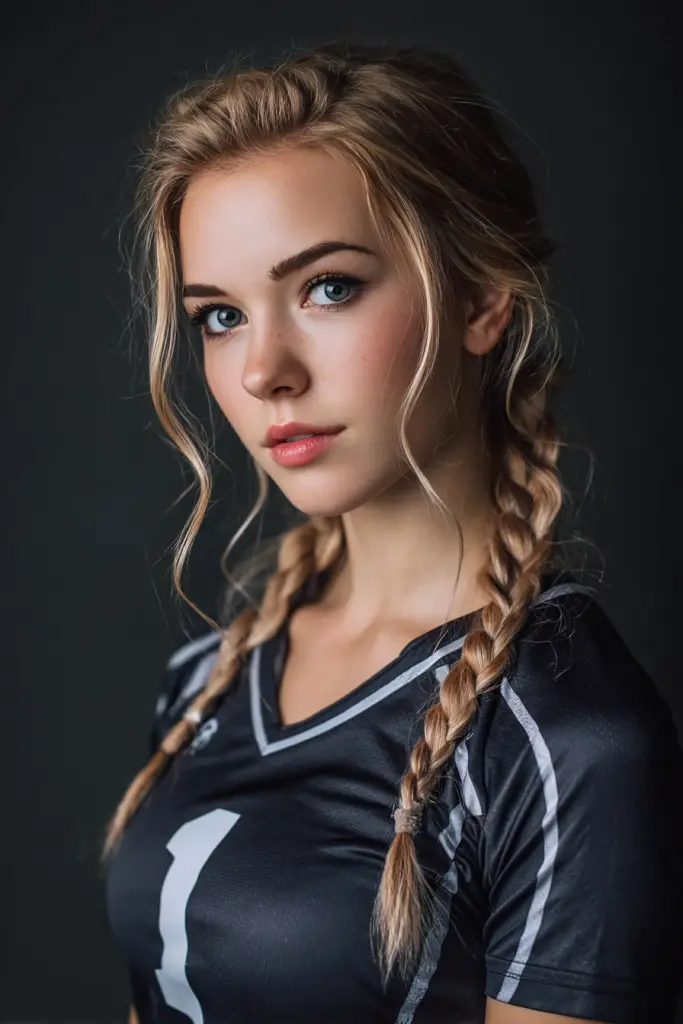
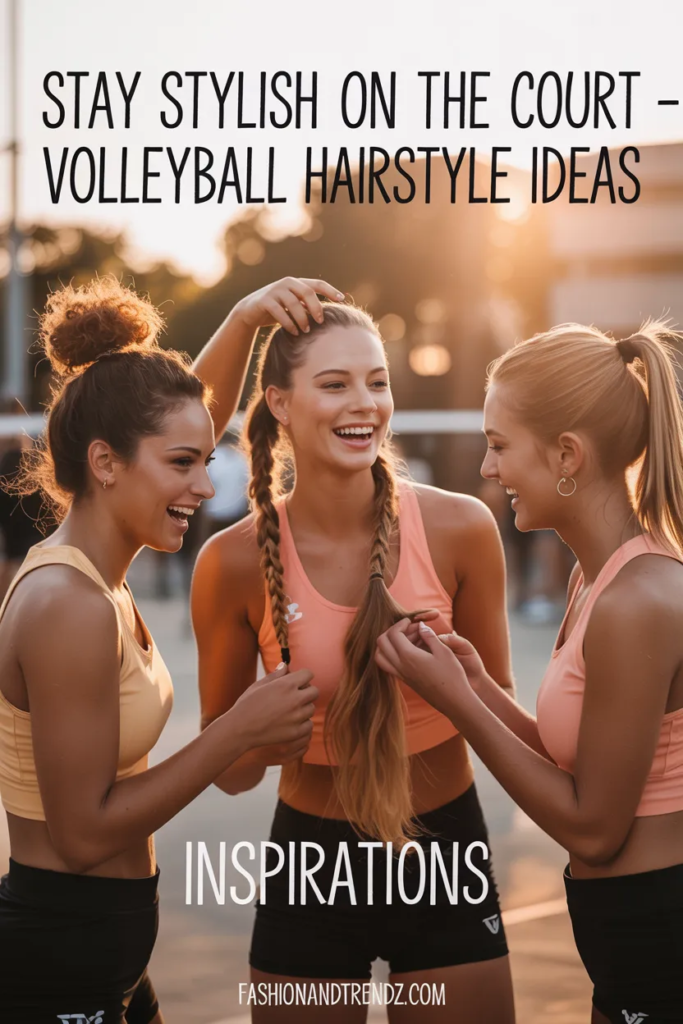
Volleyball asks a lot of a hairstyle, because the hair must stay out of the face through serves, dives, and quick turns across the court. A good volleyball style holds firmly without pulling, keeps sweat and loose strands under control, and still looks neat in team photos after the match. In my work with sport styling, I have found that braids and secure buns outperform loose styles every time, because they distribute tension evenly and stay put through movement. This guide covers fourteen volleyball hairstyles, from high ponytails and Dutch braids to topknots and bubble ponytails. Each style includes notes on hold, comfort, and how to secure it for a full match. A style that works in practice should also work under match pressure, so test every new look in training before you rely on it.
1. High Ponytail
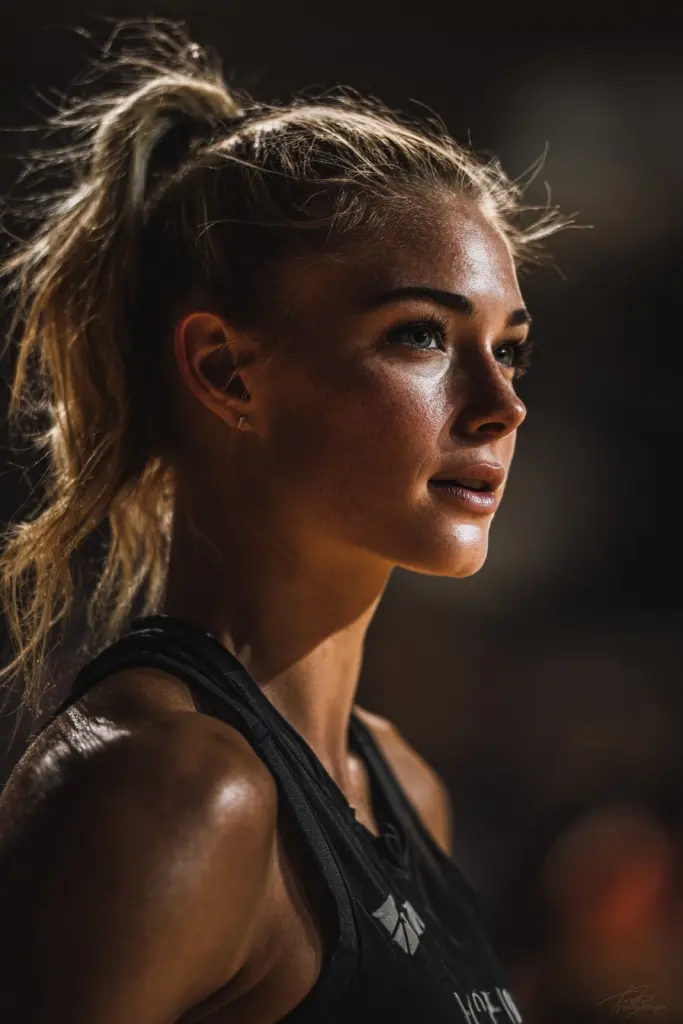
A high ponytail is the simplest volleyball hairstyle, and it works because it lifts all the hair off the neck and keeps it moving as one piece. The high placement stops strands from falling into the face during serves and blocks, which helps you stay focused on the ball. This style suits medium to long hair, and it works best with a strong elastic and a few pins at the sides. Brush the hair smooth, secure the ponytail firmly at the crown, and wrap a small strand around the elastic to keep the finish tidy.
2. Low Ponytail
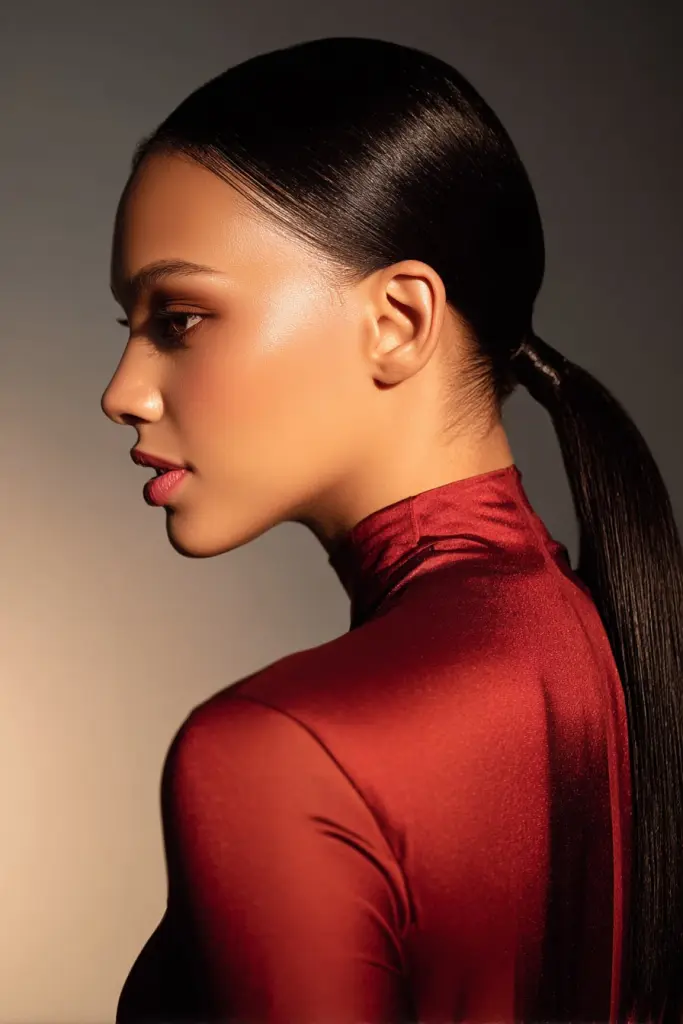
A low ponytail sits comfortably at the nape, which makes it a good choice for players who find high ponytails pull at the scalp. The lower placement keeps the hair secure without tension at the crown, and it works well under a headband for extra hold. This style suits all hair lengths from shoulder length upward, and it holds well through long rallies. Gather the hair smoothly at the nape, secure it with a snag-free elastic, and smooth any flyaways with a small amount of styling gel.
3. Braided Ponytail
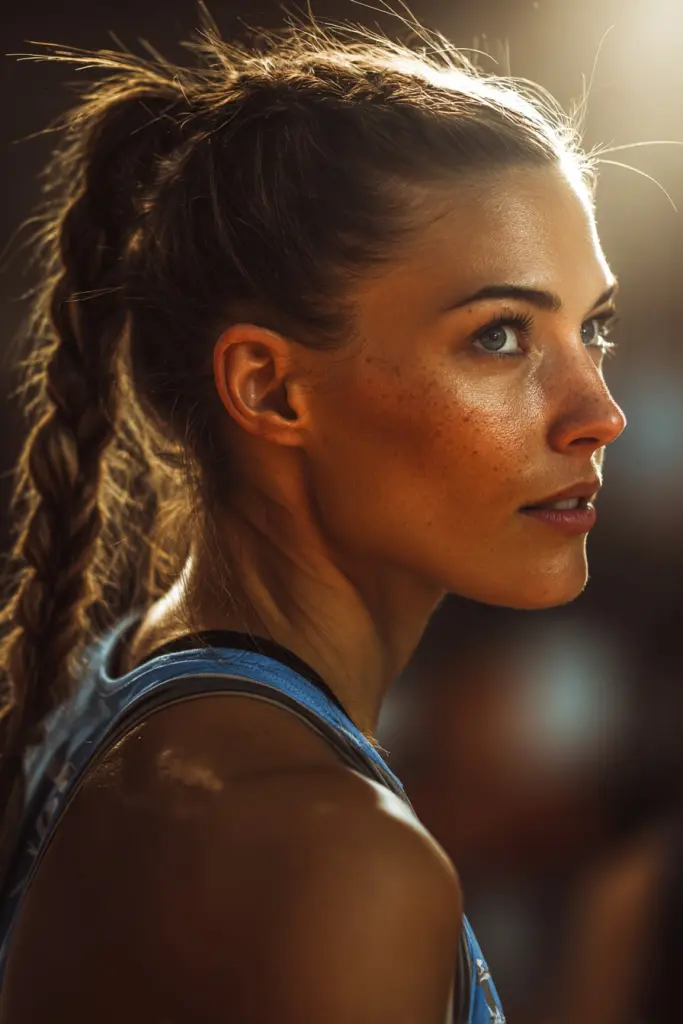
A braided ponytail combines the lift of a ponytail with the security of a braid, so the length stays controlled through every dive and jump. The braid stops the ponytail from whipping around, which keeps the hair from tangling or hitting the face during play. This style suits long hair best, and it works well for matches and long practice sessions. Secure the ponytail first, braid downward in even sections, and finish with a small elastic that matches your hair colour. A light mist of flexible spray keeps the braid smooth without stiffness.
4. Dutch Braids
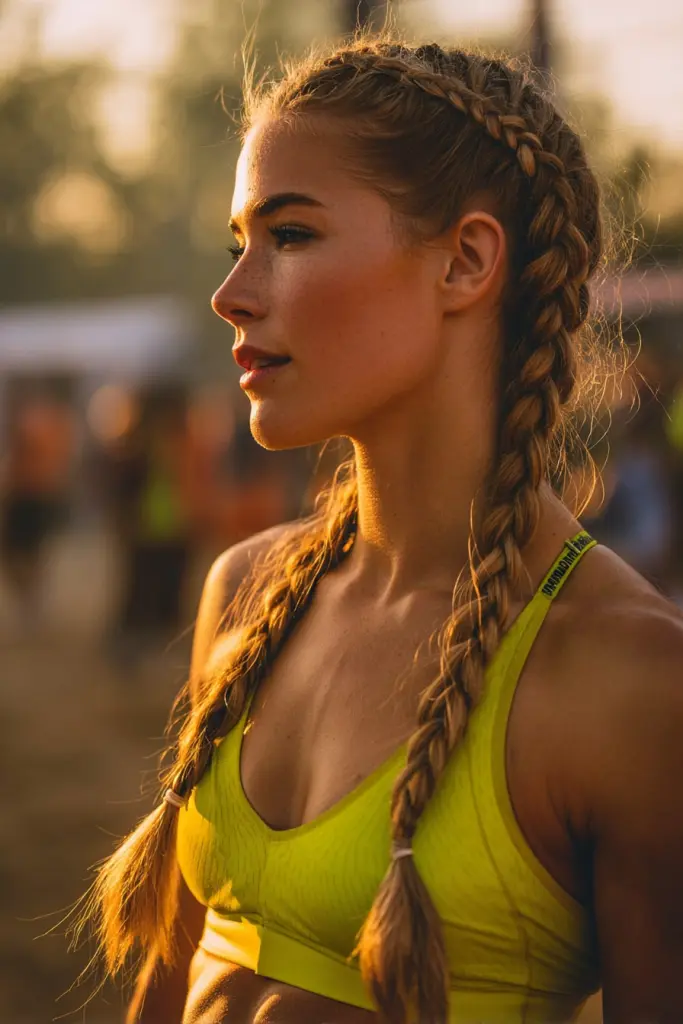
Dutch braids sit raised on the scalp, which gives them excellent grip and keeps every strand locked in place through a full match. The two symmetrical braids distribute tension evenly, so the style feels secure without pulling at any one spot. This look suits medium to long hair, and it works well for players with thick hair that slips out of ponytails. Part the hair cleanly down the centre, braid each side with steady tension, and secure the ends before tucking them under if needed.
5. French Braids
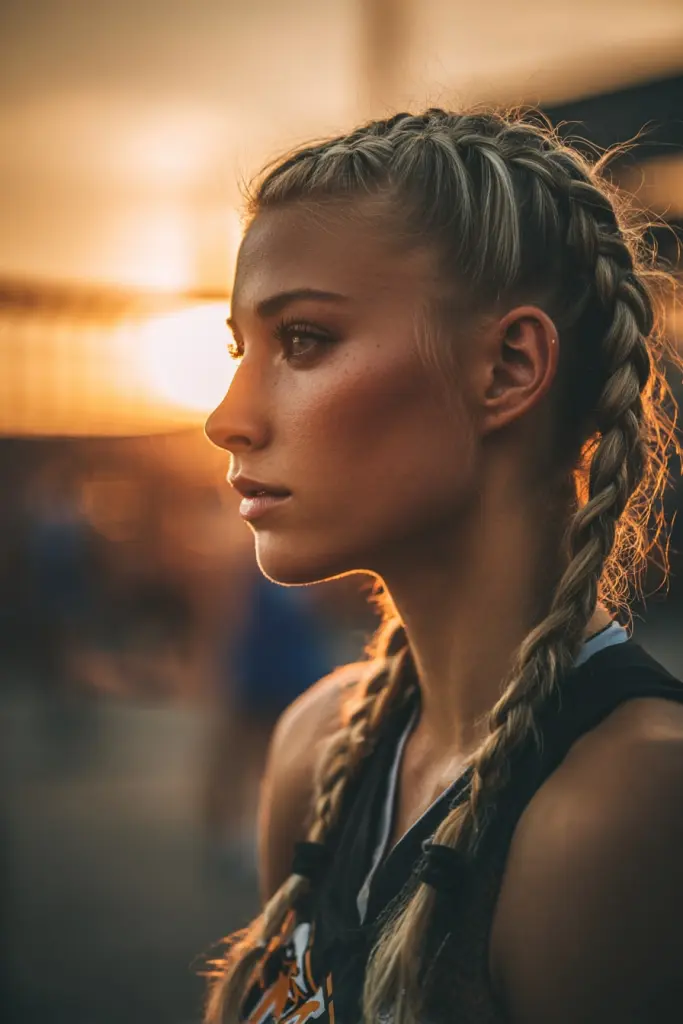
French braids lie flat against the scalp, which makes them one of the most comfortable secure styles for volleyball. The smooth, flat shape stays neat under headbands and caps, and it keeps the hair completely away from the face and neck. This style suits medium to long hair, and it works well for players who want a classic look that never loosens mid-game. Braid from the hairline toward the nape on each side, keep the sections even, and secure the ends with small elastics. Flat braids sit neatly under a sports headband and suit layered hair.
6. Braided Pigtails
Braided pigtails split the hair into two secure braids, which balances the weight evenly and keeps the style comfortable through long matches. The two braids stay close to the head, so they rarely swing into the face during quick movements. This style suits medium to long hair, and it works well for younger players and anyone who prefers a playful look. Part the hair down the middle, braid each side from the crown downward, and secure both ends at the same length for a balanced finish.
7. Messy Bun
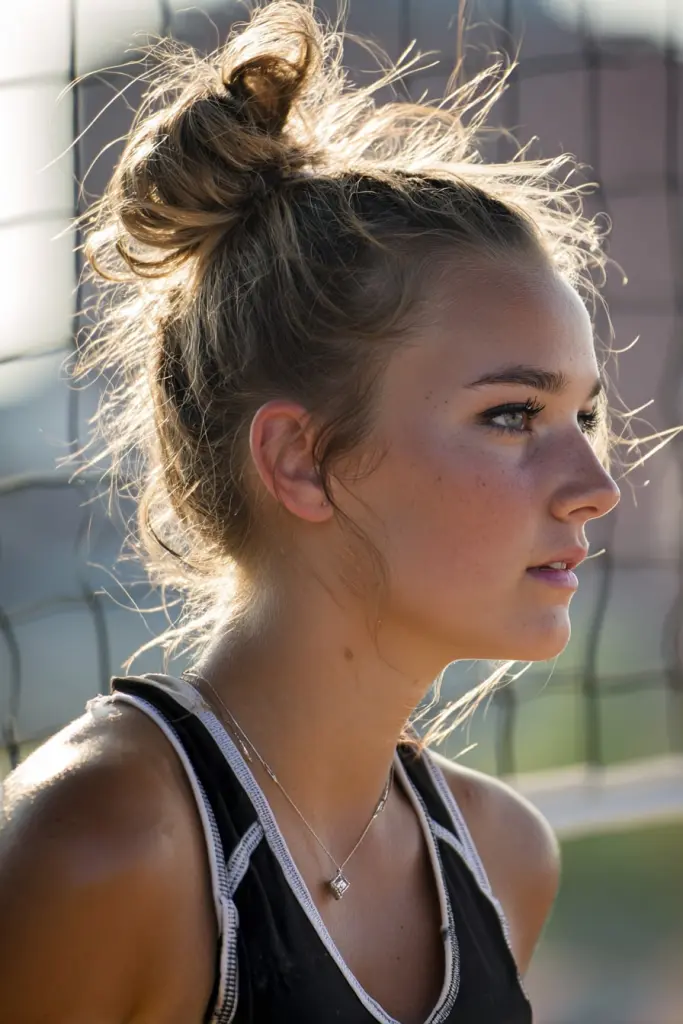
A messy bun gathers all the hair up and away from the neck, which keeps you cool and focused during fast rallies. The relaxed shape feels comfortable, and the bun stays secure with a strong elastic and a few well-placed pins. This style suits medium to long hair, and it works well for practice sessions and casual games. Gather the hair high, twist it loosely into a bun, and pin the shape firmly before smoothing the front with a soft brush. For more sporty styles, our sporty softball hairstyles include secure buns and braids that hold through active games.
8. Low Braided Bun
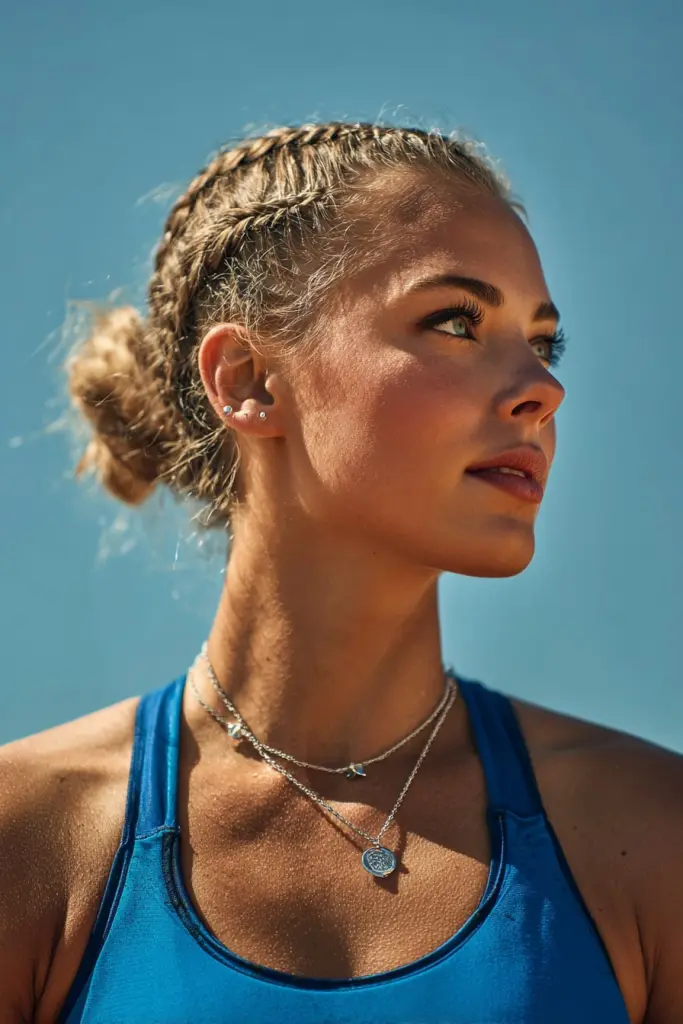
A low braided bun combines a braid with a bun at the nape, which gives double security for players who move hard on the court. The braid locks the hair in place first, and the bun then gathers the length neatly out of the way. This style suits medium to long hair, and it works well for long tournaments when the hair must last all day. Braid the hair from the crown downward, coil the braid into a bun at the nape, and pin the shape firmly on all sides.
9. High Topknot Bun
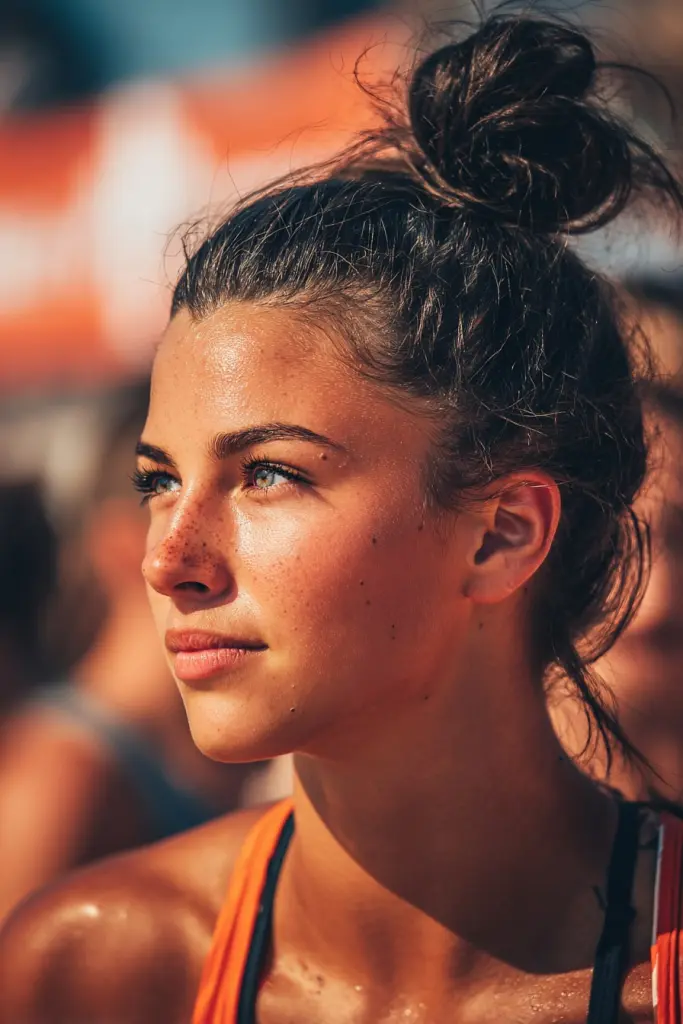
A high topknot bun sits at the very top of the head, which keeps the hair completely clear of the face, neck, and shoulders. The compact shape stays put through jumps and dives, and it works well for players who find ponytails swing too much. This style suits medium to long hair with enough length to wrap into a full bun. Gather the hair high, twist it tightly into a knot, and secure it with a strong elastic plus pins placed around the base. A silk scrunchie around the base reduces friction and keeps the knot comfortable.
10. Half-Up Ponytail
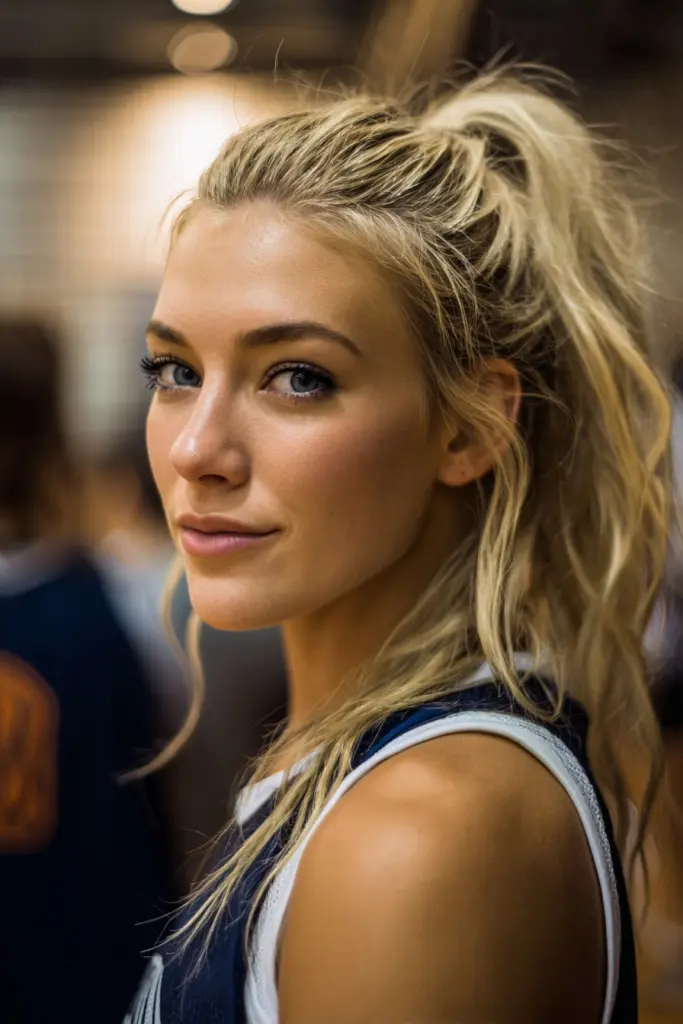
A half-up ponytail secures the front sections while leaving the rest of the hair down, which suits players with shorter hair or anyone who wants a lighter feel. The top section stays out of the face, while the loose lengths keep the style comfortable and easy to wear. This look suits shoulder-length to medium hair best, and it works well for practice and casual games. Gather the top half back, secure it at the crown, and smooth the front sections so nothing falls forward during play.
11. Cornrow Braids
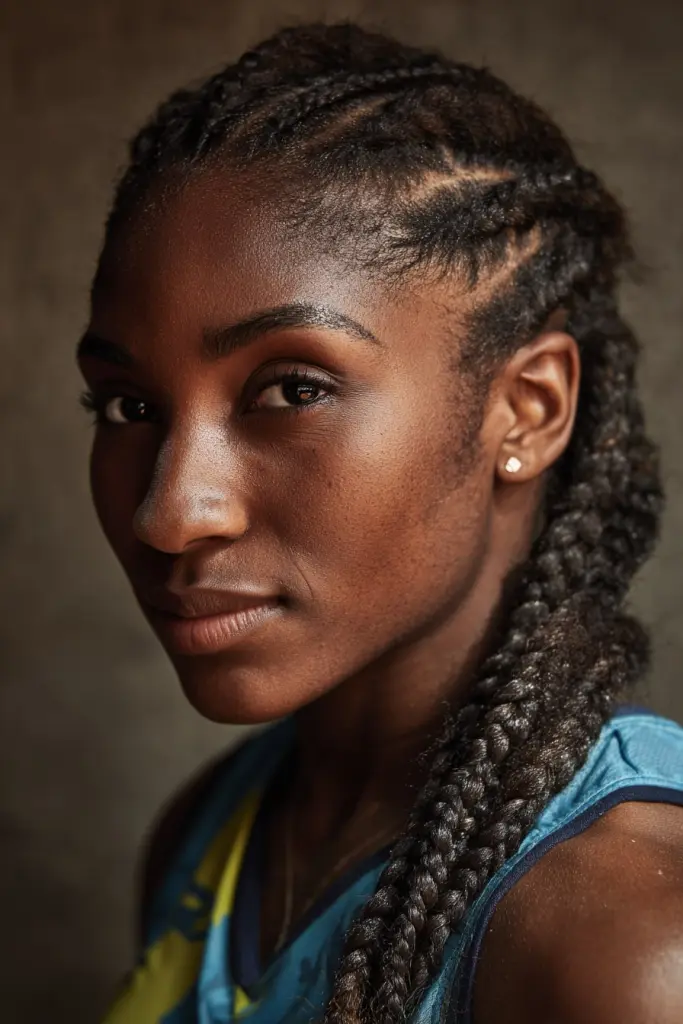
Cornrow braids sit flat against the scalp, which makes them one of the most secure hairstyles a volleyball player can choose. The close braiding keeps every strand locked down through serves, dives, and floor work, and the style lasts for days without needing attention. This look suits textured hair best, and it works well for tournaments that run across a full weekend. A stylist should keep the tension comfortable, and our cornrow and braid hairstyles show more patterns that suit sport. Moisturise the scalp between the rows to keep it comfortable.
12. Twisted Pigtails
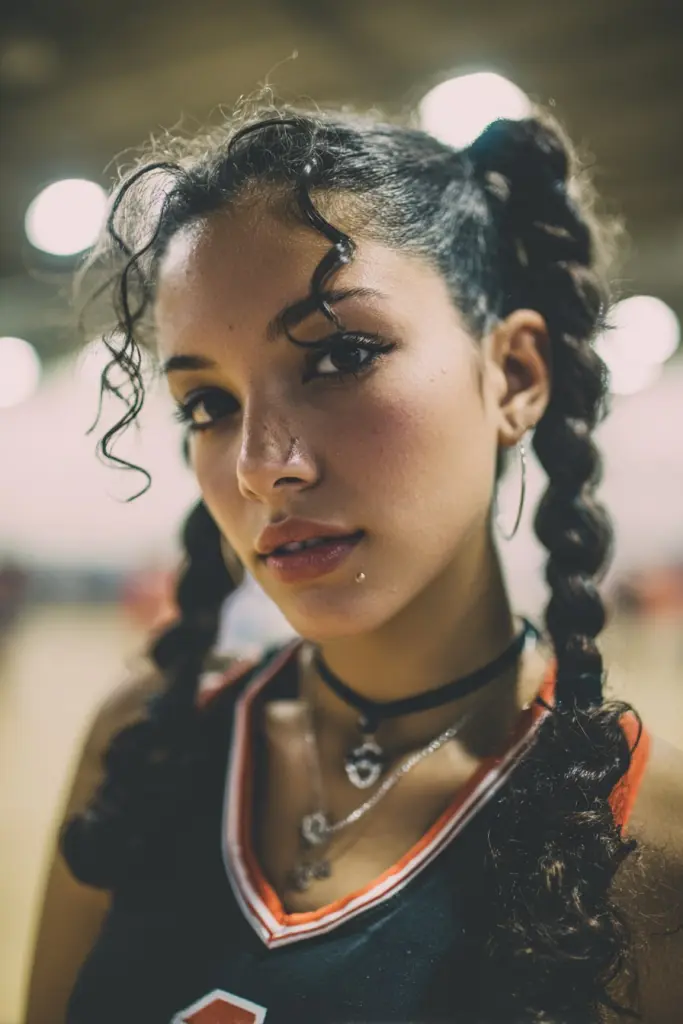
Twisted pigtails use two-strand twists instead of braids, which makes them quicker to create while still holding firmly through a match. The twists lie close to the head, so they stay out of the way during serves and blocks. This style suits medium to long hair, and it works well for younger players and anyone short on time before a game. Part the hair down the centre, twist each side from the crown downward, and secure the ends with small elastics that match your hair colour.
13. Headband and Ponytail Combo
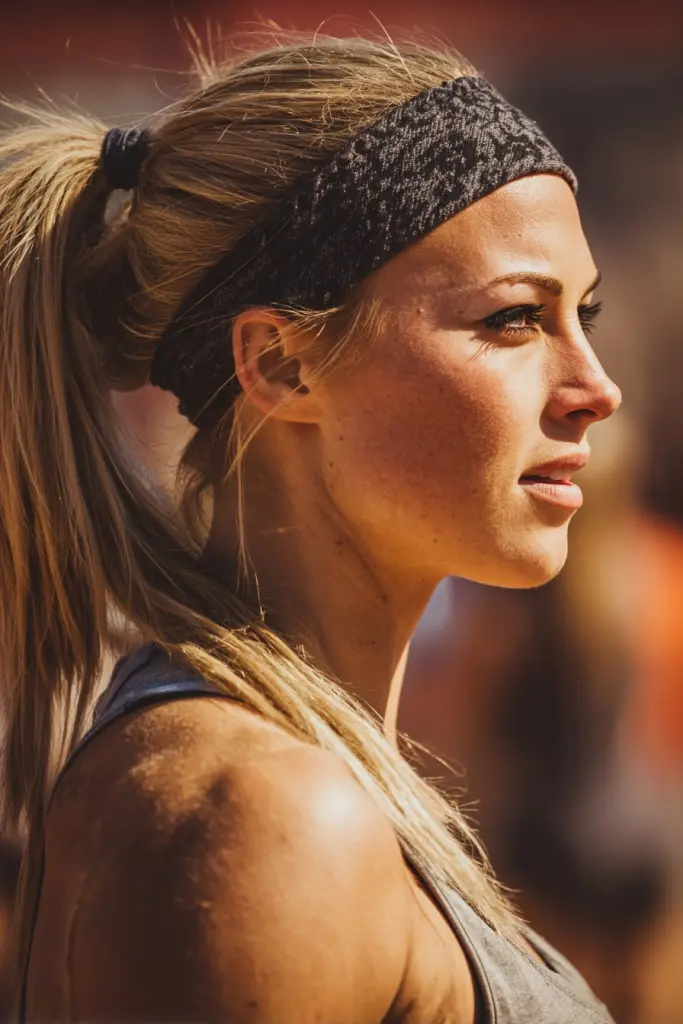
A headband with a ponytail adds a second layer of hold, because the band keeps the front sections and flyaways flat while the ponytail secures the length. The combination works well for players with layers or shorter front pieces that slip out of a ponytail alone. This style suits all hair lengths, and it works well for matches, practice, and warm gyms where sweat makes hair slip. Choose a wide, non-slip headband, place it behind the hairline, and gather the rest into a firm ponytail.
14. Bubble Ponytail
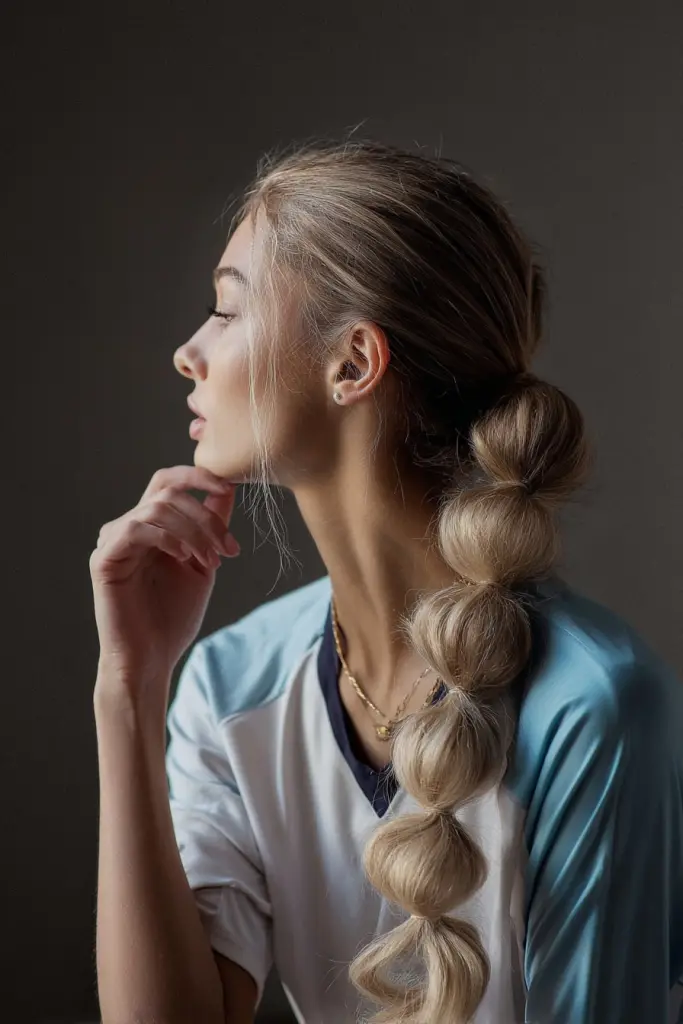
A bubble ponytail breaks the length into soft, rounded sections, which keeps the hair controlled while adding a fun, sporty detail. The elastics spaced down the length stop the ponytail from swinging wildly, and the style holds well through a full match. This look suits long hair best, and it works well for players who want a style with personality. Secure the ponytail high, add elastics at even intervals down the length, and gently widen each section for full, even bubbles. A headband with the bubbles adds extra hold for players with layers.
What to Tell Your Stylist
Tell your stylist that the style is for volleyball, because sport styles need stronger hold and flatter shapes than everyday looks. Mention how long the match or tournament runs, since a style for one game needs less staying power than one for a full weekend. Talk about your hair texture and any layers, because short front pieces often need extra pins or a headband to stay put. Mention whether you sweat heavily during play, because damp hair slips more easily and may need a stronger gel or extra pins. If you wear a headband or cap, bring it along so the stylist can fit the style around it. Ask the stylist to check the style from behind as well as the front, since a style that looks neat from the front can loosen at the nape first. Ask how to refresh the style between matches, including which pins to carry and how to smooth flyaways quickly without undoing the whole look.
FAQs
What is the best hairstyle for volleyball?
Braids are usually the best choice for volleyball, because they lock the hair in place and distribute tension evenly across the scalp. Dutch braids, French braids, and cornrows all stay secure through serves, dives, and quick turns. Ponytails and buns also work well when secured firmly, but braids hold longest.
How do I keep my hair in place during a match?
Start with clean, dry hair and a strong, snag-free elastic, because weak elastics loosen styles. Add pins firmly at the sides and nape where hair slips, and smooth flyaways with styling gel. A wide, non-slip headband adds another layer of hold, and our ponytail hairstyle ideas include secure ponytail variations that work well for sport.
Are braids better than ponytails for volleyball?
Braids usually hold better than ponytails for volleyball, because the woven sections lock the hair down along the whole length rather than at a single point. A ponytail can loosen or swing during fast movements, while a braid stays close to the head. Ponytails still work well for shorter games and for players who prefer a simpler style.
Can I play volleyball with short hair?
Short hair works well for volleyball, because less length means fewer loose strands fall into the face. A headband keeps front sections back, and styling gel smooths flyaways well. Players with a bob can use clips, and our quick cute school hairstyles include short styles that stay neat through activity.
Conclusion
The best volleyball hairstyle is the one that stays secure, feels comfortable, and lets you focus on the game instead of your hair. Braids, buns, and well-secured ponytails all earn their place on the court, and the fourteen styles in this guide cover every hair length and texture. Practise your chosen style before match day, pack spare elastics and pins, and pick the look that holds up best for you. The right style should feel so secure that you forget about it completely once the first serve goes up.
4 Comments